Tuesday 12th May
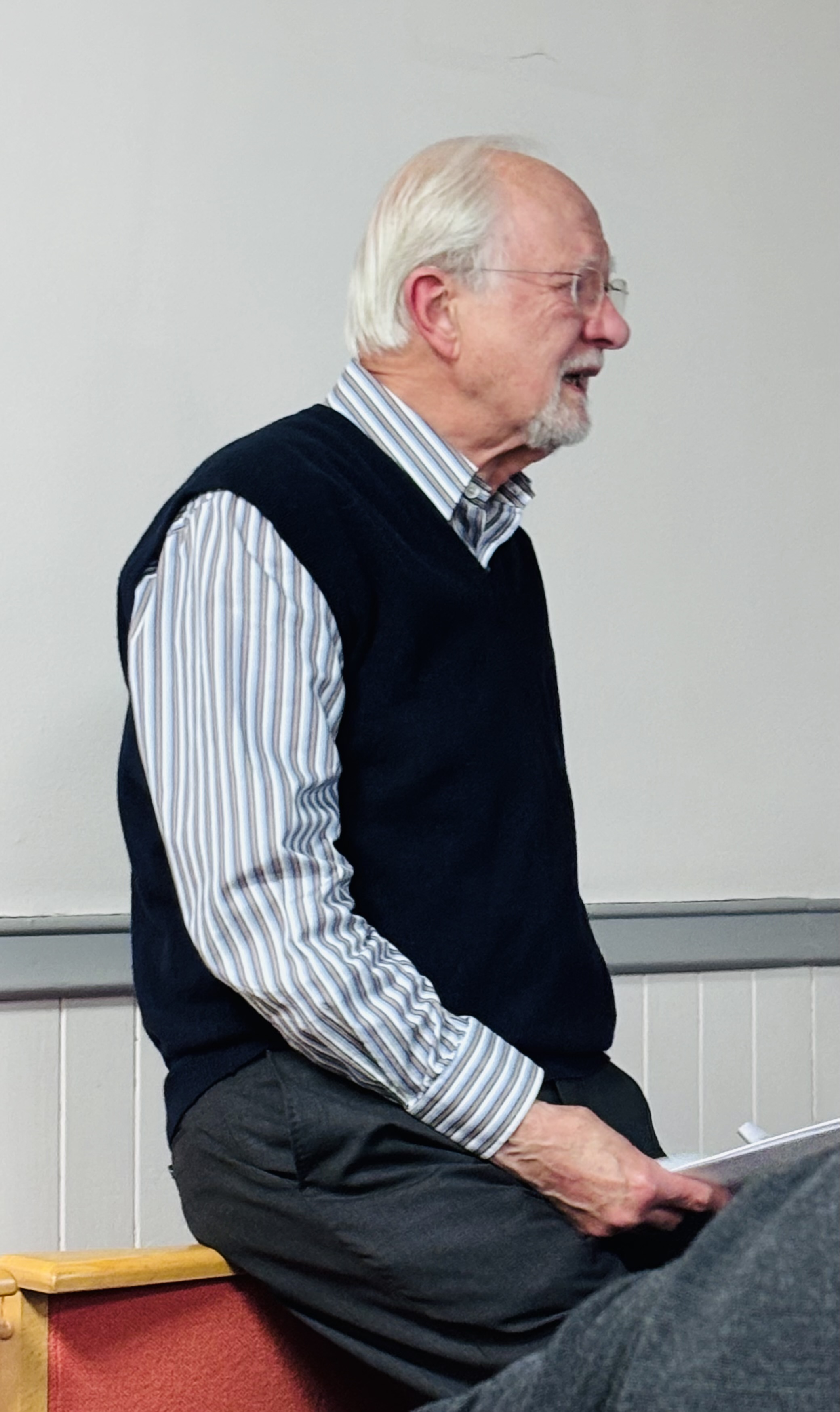
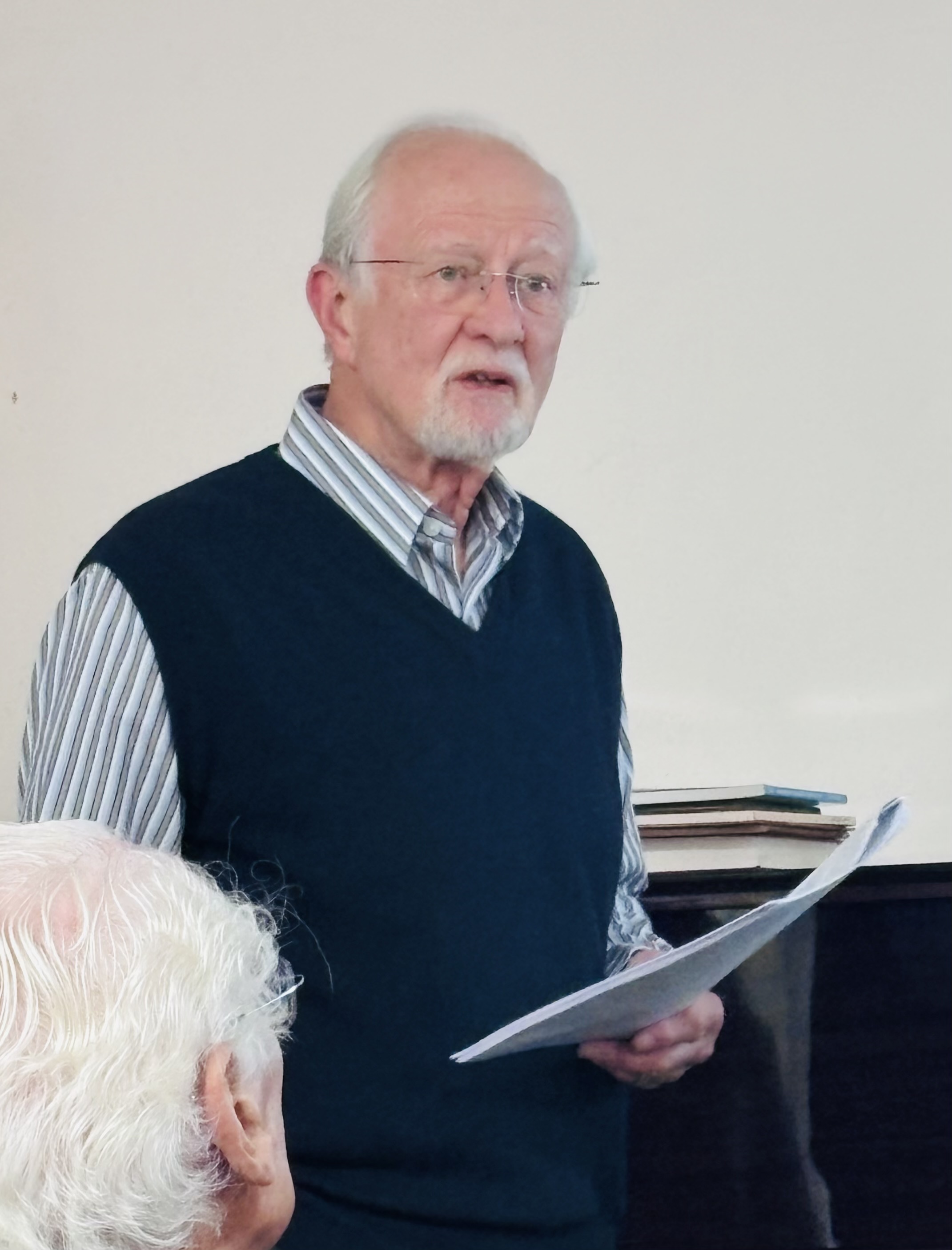
John Malpass
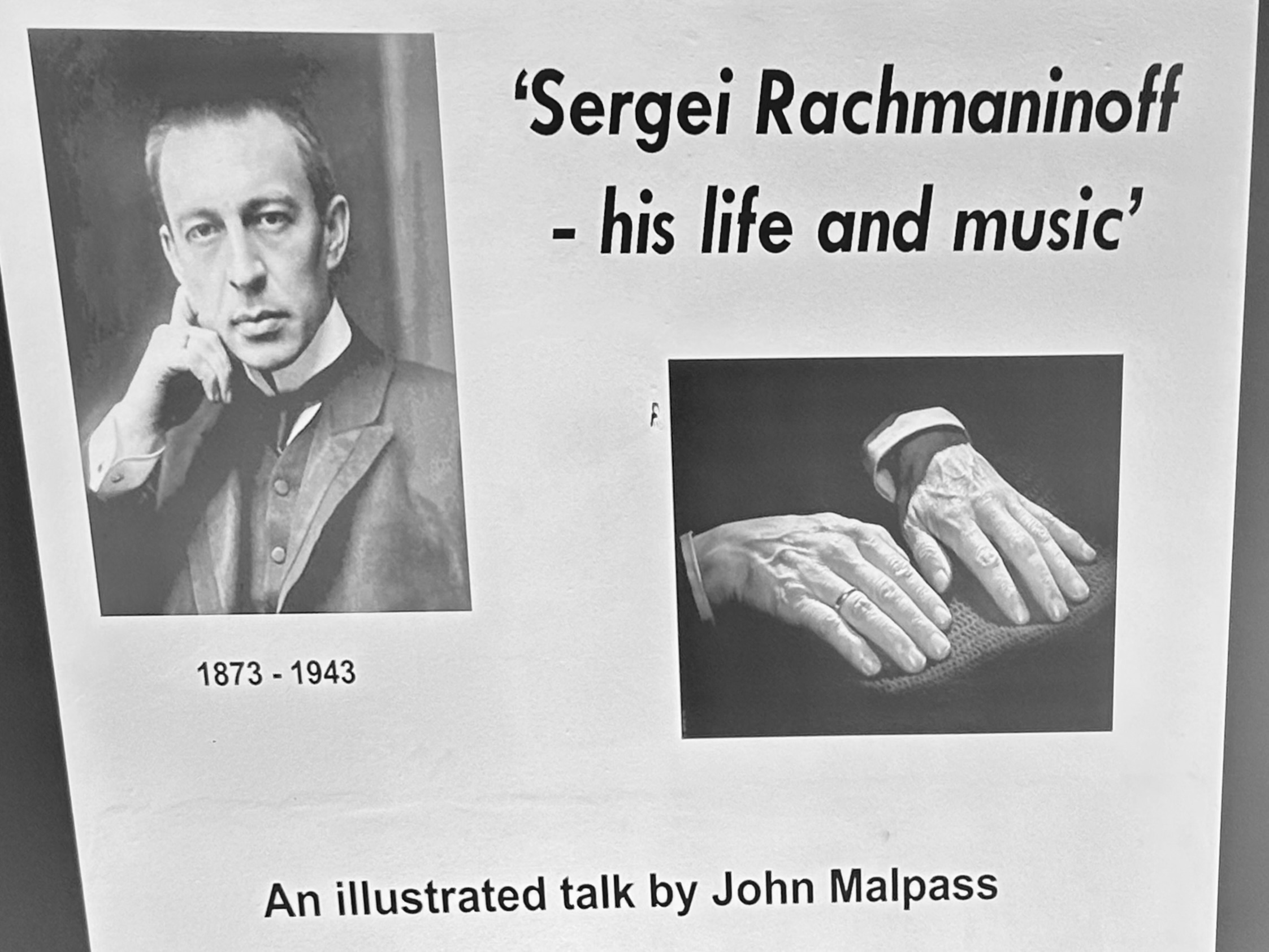
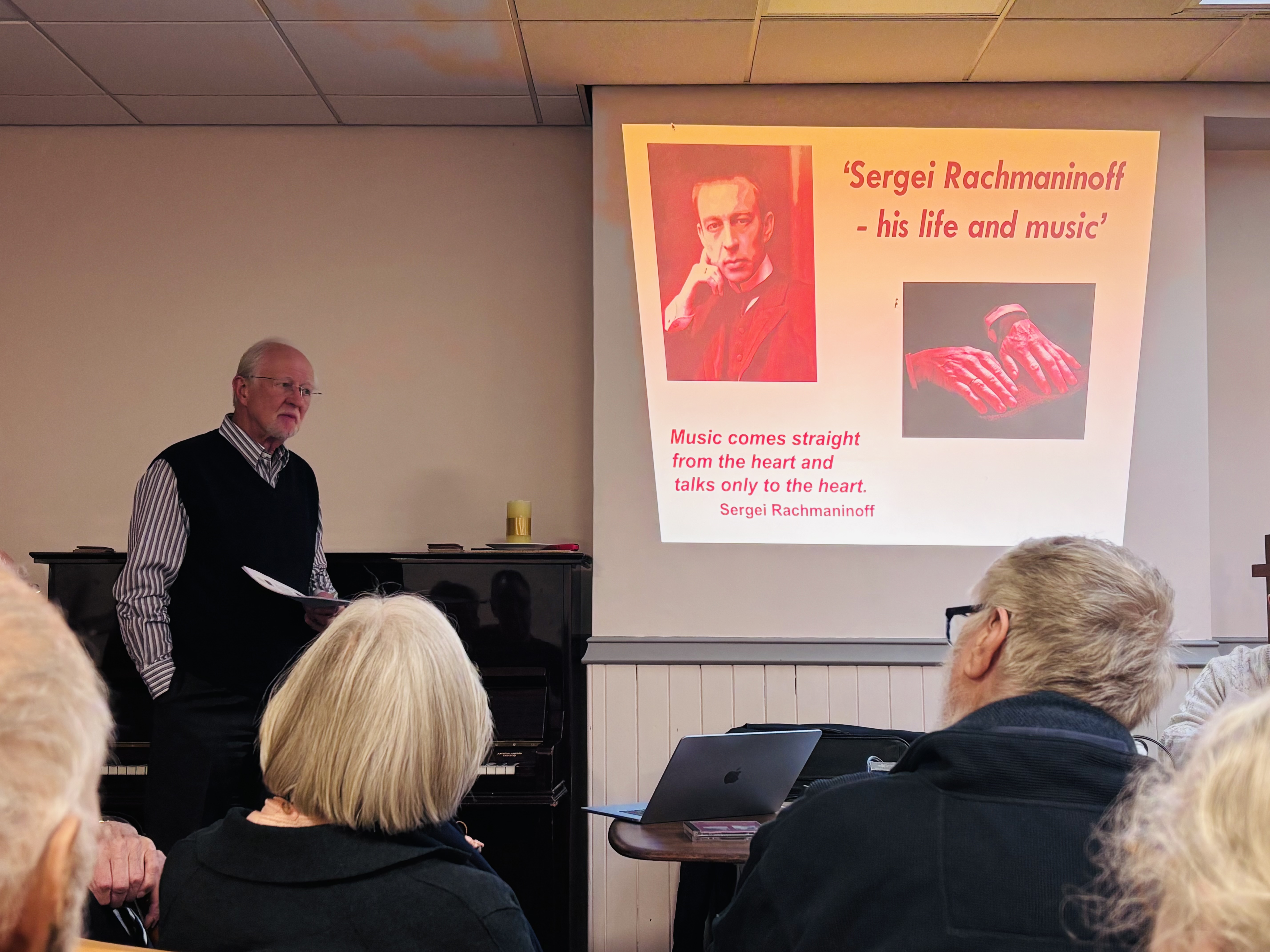
Sergei Rachmaninoff: his life and music
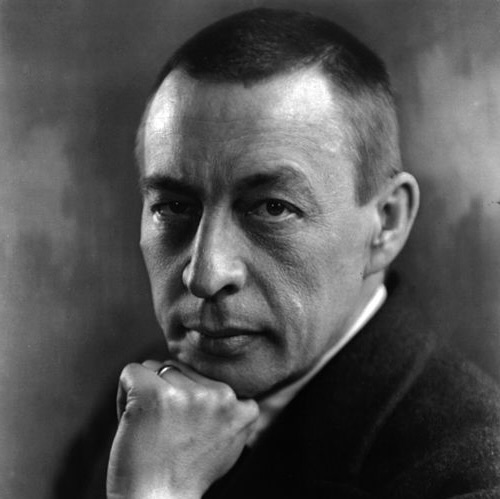
Dr Malpass explores Rachmaninoff’s fascinating personal and musical life with photographs and a wide range of recorded music ranging from his piano repertoire (some with the composer at the piano) to his songs, orchestral, liturgical, choral, operatic, and chamber works.
Appreciation by Ron Mitchell
I was especially looking forward to this talk on the life and music of Sergei Vasilyevich Rachmaninoff, one of my favourite composers. Over the years I have picked up many fragments about the composer’s life and work, but Dr Malpass’s presentation brought fresh insights, particularly into some of the lesser-known music.
The talk followed Rachmaninoff’s life chronologically, beginning with his birth in the ancient Russian city of Novgorod — ‘Newtown’, oddly enough. Dr Malpass showed us a striking image of the cathedral bells that made such an impression on the young composer when his grandmother took him there. The sound of bells would resonate throughout Rachmaninoff’s music for the rest of his life.
As a boy he was, by all accounts, something of a wild child. His musical gifts were recognised early, but after failing all his examinations at the St Petersburg Conservatoire, his mother took drastic action. On advice, she sent him to the Moscow Conservatoire, where he lived under the strict discipline of the aptly named Nikolai Zverev and his even severer sister. Under this regime Rachmaninoff flourished, eventually graduating from the Conservatoire with maximum marks and receiving special commendation—and four gold stars—from Tchaikovsky himself.
Dr Malpass illustrated this period with a vivid extract from Aleko, the one-act opera Rachmaninoff composed as his graduation piece in only seventeen days. The work so impressed Tchaikovsky that he proposed staging it alongside his own opera Iolanta.
Naturally, much of the talk centred on the piano music. Dr Malpass recalled first hearing the Second Piano Concerto as a teenager after buying his first LP, describing the music as something that ‘goes to the heart, as well as the brain’. We heard wonderful recordings ranging from Martha Argerich in the Third Concerto—first performed by the composer himself under Mahler’s baton—to Earl Wild playing his transcription of the song O, Do Not Grieve for Me, and André Previn and Vladimir Ashkenazy in one of the many works for two pianos. Dr Malpass awarded Ashkenazy and Previn much of the credit for bringing about the revival of interest in Rachmaninoff's music after it had fallen out of favour for many years after the second world war.
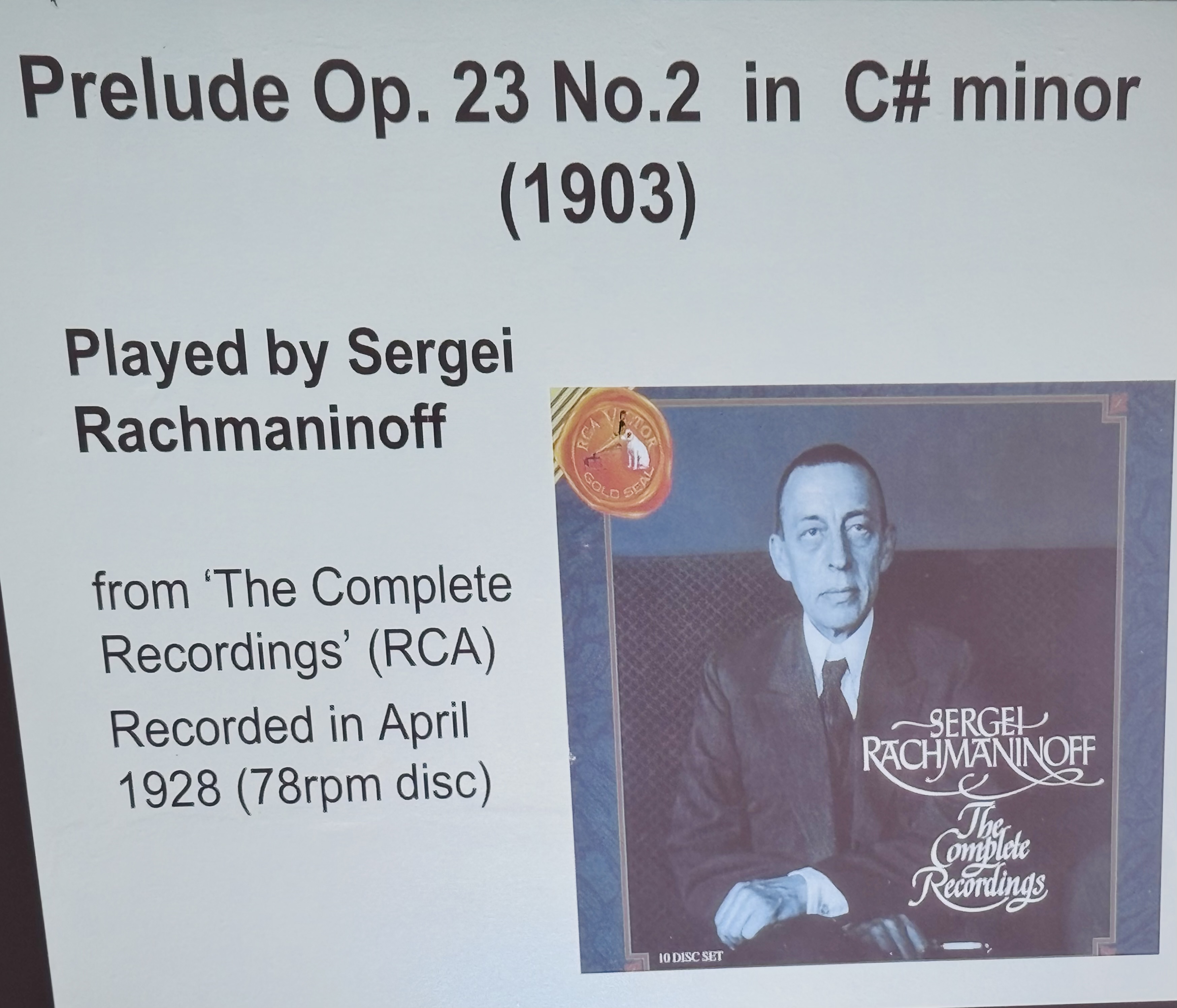
Perhaps most fascinating of all, thanks to the marvels of recorded sound restoration, we were also able to hear Rachmaninoff himself at the keyboard. In the famous Prelude in C sharp minor he played with remarkable restraint, unleashing power only when necessary. We also heard one of the early Moments musicaux. We are fortunate indeed that so many recordings of Rachmaninoff’s own playing survive and are readily available. Only a few days old when the composer died, Dr Malpass never himself heard Rachmaninoff play, but he does possess a signed programme from a recital in Liverpool. It shows a wide variety of repertoire: Bach, Beethoven, Chopin, Liszt, Wagner. And, also, said Dr Malpass, how to spell the name: ‘Rachmaninoff’ (not ‘Rachmaninov’) was how the composer signed himself.
Dr Malpass emphasised Rachmaninoff’s achievements as a composer for the voice. On a smaller scale there are some seventy art songs, several of which we heard during the evening. It was striking how often the piano part functions not as mere accompaniment but as an equal partner in the music.
Then there are the larger-scale vocal works. Dr Malpass spoke with particular enthusiasm about The Bells, the choral symphony based on a freely translated Russian version of Edgar Allan Poe’s poem, calling it Rachmaninoff’s ‘Fourth Symphony’ and the composer’s own favourite among his works. We also heard extracts from the mighty All-Night Vigil (Vespers). Dr Malpass possesses a treasured recording, obtained in Soviet times, made in Smolensk Cathedral in 1965. The sound quality may not have been ideal, but the performance was fervent and thrilling, and the deep bass notes at the close sent a shiver down my spine.
The presentation was enhanced by excellent visual material, something I mentioned in my vote of thanks to murmurs of agreement from the audience. As well as photographs of Rachmaninoff and other musicians, Dr Malpass thoughtfully projected translations of song texts while the music was playing. Particularly memorable were images of the composer relaxing on Ivanovka, his Russian country estate—later confiscated by the Bolsheviks—and, later still, at Senar, the beautiful villa he built beside Lake Lucerne in Switzerland.
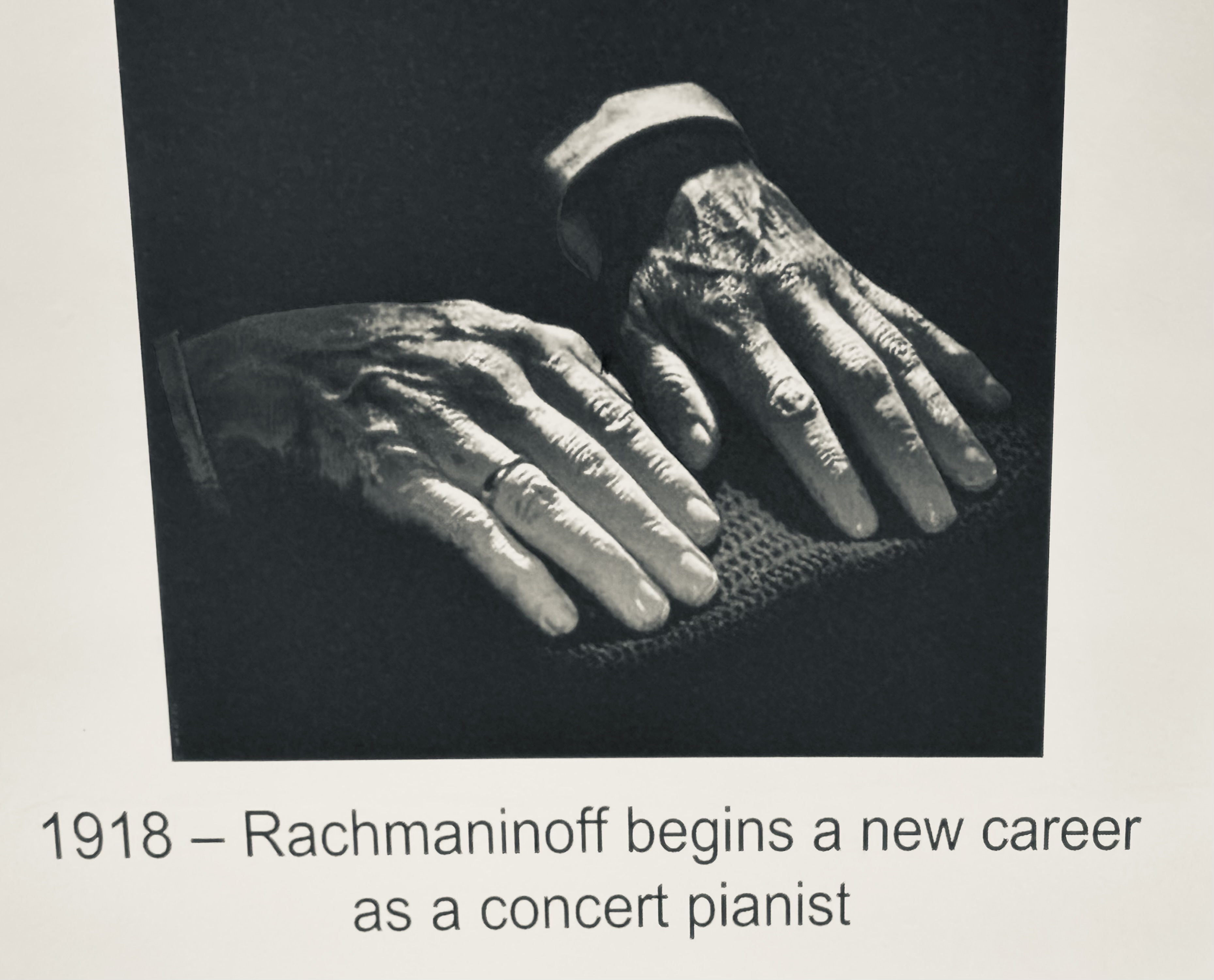
The Russian Revolution of 1917 forced Rachmaninoff and his family into exile. Eventually settling in the United States, he reinvented himself as a touring concert pianist in order to support them. It was a punishing existence, involving constant travel and performance, and he maintained it right up until his death in Beverly Hills in 1943.
Dr Malpass headed towards a conclusion with the Symphonic Dances, Rachmaninoff’s final major work and the only one composed entirely in the United States. We heard the waltz-like second movement: unmistakably Rachmaninoff in its lush sonorities, yet also forward-looking, coloured by touches of jazz and even the distinctive sound of a saxophone. Although he spoke of it as his ‘last spark’, it was remarkable to hear such adventurous music from a composer often regarded as the last great Romantic.
But, unwilling to leave us on the slightly sinister note of the Symphonic Dances, Dr Malpass returned to the concerto form and the Rhapsody on a Theme of Paganini. First came the famous eighteenth variation—deservedly a Classic FM favourite—and then the climax, where after all the virtuoso tumult the music subsides quietly and almost bathetically onto a fragment of the original Paganini theme. As always, the effect drew smiles and gentle laughter from the audience, sending us home in excellent spirits after a richly rewarding evening.
Playlist
Here is a replica of the playlist which Dr Malpass distributed.
Images
Links
The Rachmaninoff Network is the enduring internet legacy of the former Rachmaninoff Society.
You can listen to the 1965 Smolensk Cathedral recording of the Vespers. The sound quality is only mp3, but it will give you an idea of this famous recording.
There is a delightful story linking Harpo Marx and Rachmaninoff. The YouTube excerpt at the end from A Day at the Races is worth watching—Harpo versus the Prelude in C♯ Minor. (Harpo wins.) (What is interesting about this is that in 1937 the Marx Brothers could reference this piece of music knowing that much of the cinema audience would have heard it or heard of it.)