Tuesday 13th January
Stuart Emmerson
Such Sweet Thunder: Duke Ellington’s Shakespearean suite
Following on from John Florence's talk last season in which Shakespeare's works inspired many musical creations down the years, Dr Emmerson presents 1957’s Duke Ellington suite Such Sweet Thunder, revealing a connection with Elgar's Enigma Variations. He illustrates the meanings of the suite's 14 movements, and explores its own hidden enigma.
Appreciation by Ron Mitchell
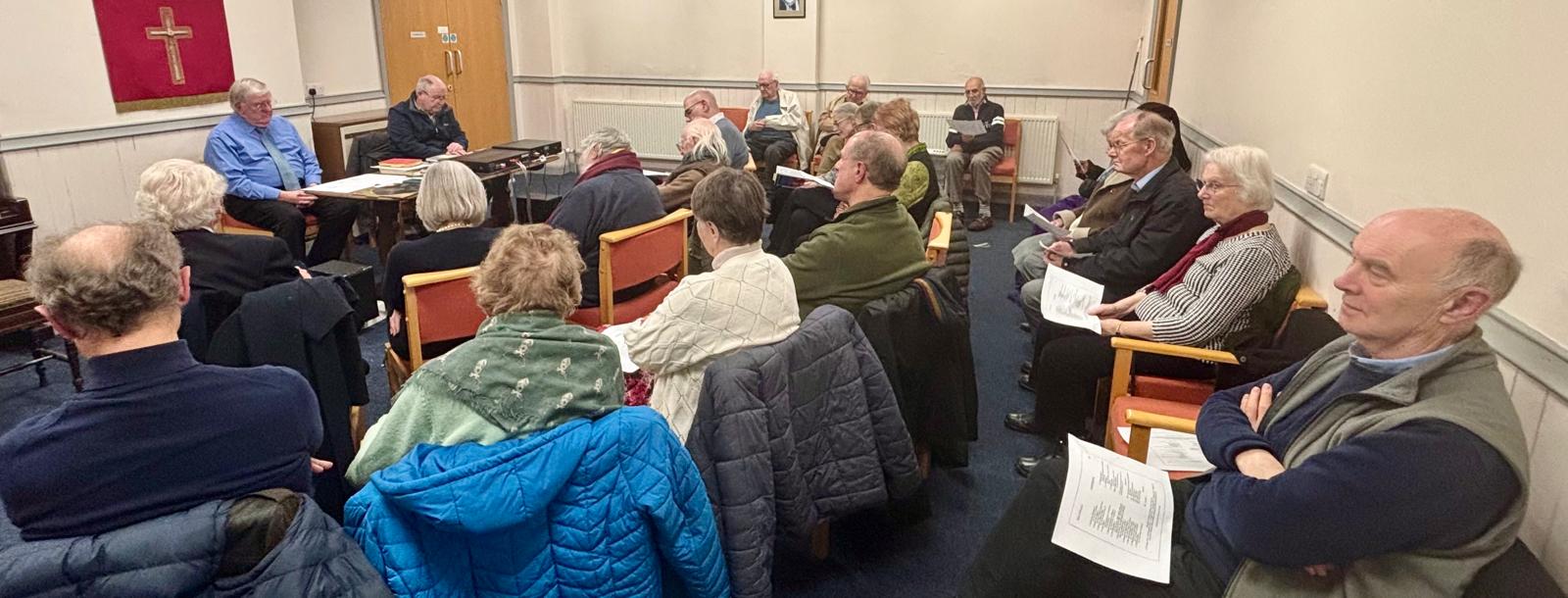
Our LMS meetings usually cover fairly broad topics: a composer, a performer, a genre or period of music. But Stuart Emmerson came to us with a somewhat unusual brief: a "deep dive" into a single piece of music, Duke Ellington's 1957 fourteen-movement suite, Such Sweet Thunder.
Stuart distributed a useful handout (see below). On one side was a time-line of Ellington's life, which listed seventeen items, either events or musical compositions. On the reverse was what looked like a page of a CD insert which listed the tracks of Such Sweet Thunder with various information such as the soloist(s) playing on each track and its Shakespearean reference.
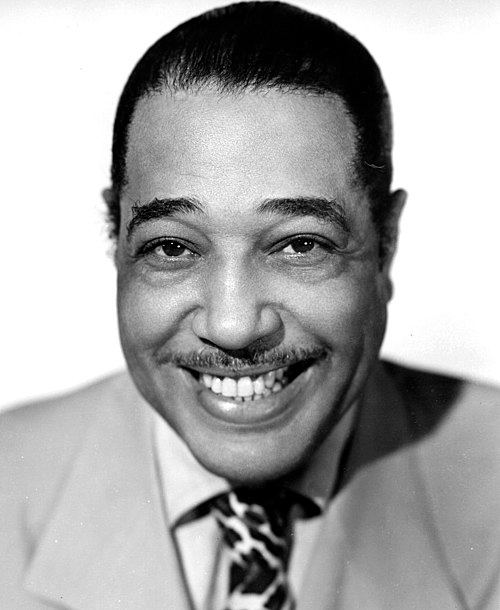
Stuart began by tipping his hat to previous LMS speakers Roger Wheeler and John Florance, who had each mentioned the Ellington suite without having had time to examine it in detail. Then he sketched briefly the life of Edward 'Duke' Ellington, from his strict religious upbringing by his mother, who from the first believed her son was destined for something special, through an initial ambition to become a painter, then the formation of his first octet playing at local parties and the switch from visual art to music. But the eye of the painter always influenced Ellington's method of writing. More than one commentator has pointed out that what he wrote was always aimed at the talent and emotional make-up of each individual member of his band. 'Ellington plays piano, but his real instrument is his band'.
A move to New York brought Ellington and his band near-instant success when his agent landed them a residency at the famous Cotton Club, probably, hinted Stuart, through mafia connections. This brought a weekly nationwide radio spot, fame, recording contracts and financial success.
Enter now the other composer of Such Sweet Thunder, Billy Strayhorn. A shy, retiring individual with a prodigious gift of composing in any given musical style, he was sixteen years younger than Ellington, who in effect adopted him as a 'second son'. Strayhorn's compositional talent came to the fore when a dispute between radio stations and the society of music publishers, ASCAP, resulted in radio stations refusing to broadcast any ASCAP published music. Ellington put his son Mercer and Strayhorn together in a hotel room to compose new music for the band.
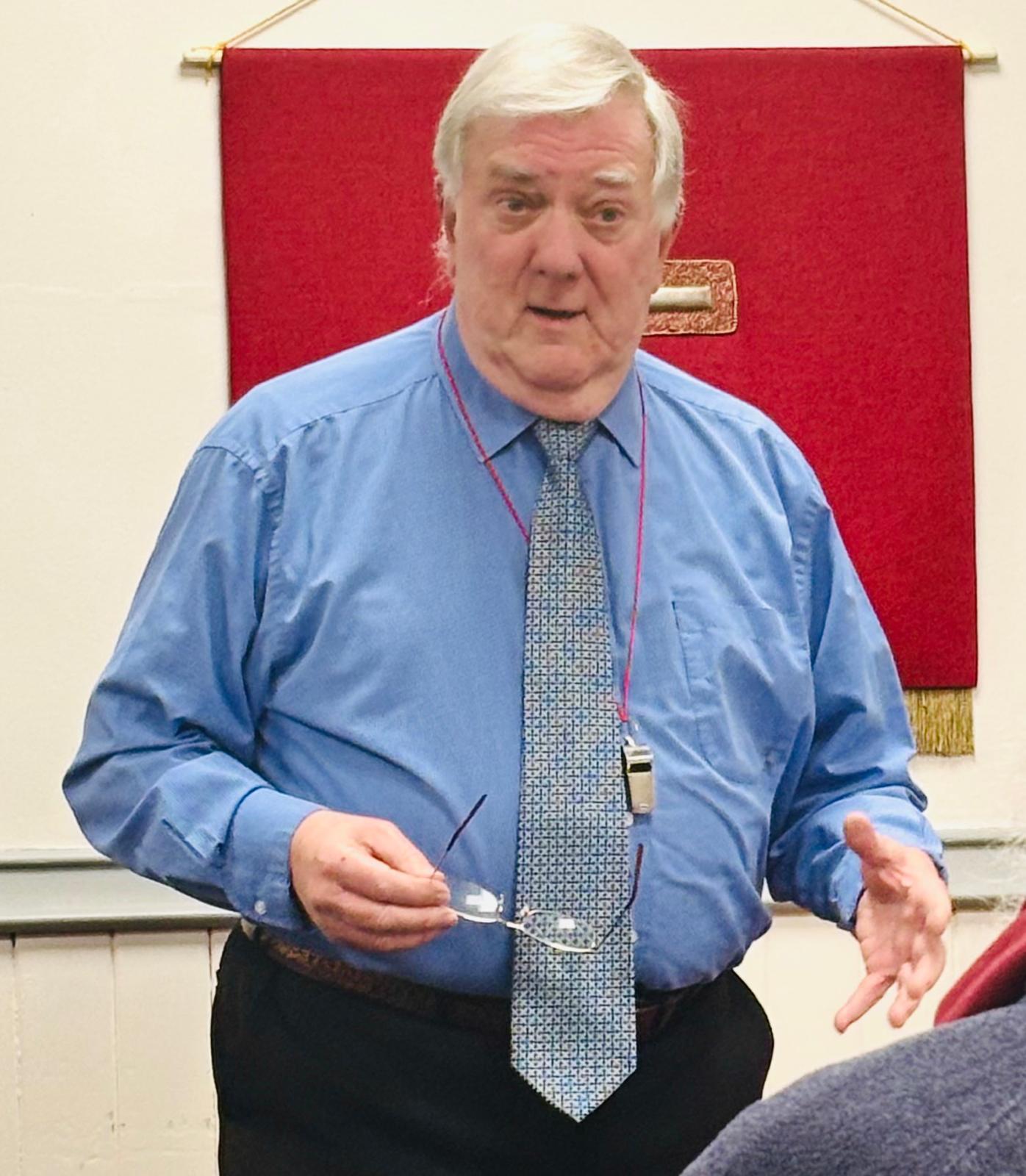
It was Strayhorn who composed what became the band's signature tune, Take the A-Train. On the Keene Room piano, Stuart demonstrated the part that a whole-tone scale plays in the piece—possibly inspired by Strayhorn's love of Debussy. Then Stuart blew his whistle to set us off in the recording, which took us from downtown New York in C major to uptown Harlem in joyful E flat with unmuted trumpet.
The Shakespeare suite—whose 'sweet thunder' title was neither Ellington's idea nor Strayhorn's but their publisher's—is jointly credited to both men. But it's possible to see from the manuscript who wrote each movement. Each movement is based on some aspect of Shakespeare's plays. We heard eight of them:
- No. 1 Such Sweet Thunder. This is about Othello. The ominous flattened note at the end hints at the Moor's downfall.
- No. 4 'Lady Mac' (mostly by Strayhorn) Lady Macbeth is 'out of step' with accepted behaviour and the piece is in 3/4 time, 'out of step' for most jazz.
- No. 7 'Up and Down, Up and Down (I Will Lead Them Up and Down)' (by Strayhorn alone). Puck in A Midsummer Night's Dream. At the end a trumpet squawks out Puck's line, 'Lord, what fools these mortals be!'
- No. 6 'The Telecasters'. The three Witches of Macbeth and Iago. They plant ideas in Macbeth's and Othello's minds the way that television does to its viewing audience.
- No. 9 'The Star-Crossed Lovers'. Romeo and Juliet. Mary Whittaker prefaced the recording with part of Juliet's balcony speech, 'O Romeo, Romeo, wherefore art thou Romeo…' I found Strayhorn's melody very beautiful, all his own apart from Ellington's fancy arpeggios at the start and finish.
- No. 12 'Suburban Beauty'. Three trombones represent Portia, rejecting each of her eight suitors in turn.
- No. 13 'A Flat Minor' Not a musical key signature, but a joke about flat, minor characters in Shakespeare; here Ariel and Miranda in The Tempest. Stuart suggested the fade at the end represents Miranda sailing away from the enchanted island to her 'brave new world' in the last item…
- No. 14. 'Café au Lait' sub-titled 'Brave New World'. Brown coffee and white milk together make a fine drink.
Stuart began to develop his idea about the meaning of the suite by referring us back to the Black and Tan Fantasy which he'd played right at the start. Clubs like the Cotton Club were mostly segregated by race, but one or two were not, like the 'Black and Tan' club. The 'fantasy' of the title is perhaps the hope that some day all such segregation would be a thing of the past, hence the quotation from Chopin's funeral march at the end in encouragement of its ultimate demise. Dancers in the Cotton Club had to be light-skinned—the colour of café au lait.
In 1957, the year of Such Sweet Thunder, the US was heavily racially segregated. Ellington wanted to say something about this, but he could only do so through his music. As he put it, 'You can say anything you want on the trombone, but with words you've got to be careful'. The whole piece is about barriers that need to be broken down. Stuart had asked us whether the title movement was in a major or minor mode, but the only feasible answer is that it is in neither—or both.
- The rival families in Romeo and Juliet (the historical Montagues in Verona were Jewish, so this was also a religious barrier);
- Portia's rejection of the suitors of high wealth and status in favour of the modest man she really loves;
- Othello in No. 1 and Desdemona in No. 5 'In Search of A Moor' (which we didn't hear). 'A Moor' is also 'Amour' - love.
- The 'Brave New World' of Nos. 13 and 14 is a world without racism.
Thus Ellington was, to some extent, hiding behind Shakespeare to make his point, his philosophy of 'non-categorisation'.
Finally, Stuart pointed to some parallels between Edward Ellington and Edward Elgar.
- Such Sweet Thunder and Elgar's Enigma Variations both have 14 movements
- Both suites had extra musical material inserted at the end at the prompting of others. August Jaeger persuaded Elgar to add 100 bars to the end of Enigma; Ellington's producer made him add the 'musically vacuous' Circle of Fourths movement to the end of Such Sweet Thunder.
- Both men belonged to minority groups, Roman Catholic and African-American.
- Both had early piano lessons but were mainly self-taught in composition.
- Elgar famously said that 'the world is full of music...you simply take what you need', and Ellington was said always 'to look about him with a painter's eye'.
- Both outsiders eventually became establishment figures, Elgar appointed Master of the King's Musick; Ellington receiving the US Presidential Medal of Freedom.
I very much enjoyed this excursion conjoining one favourite subject of mine, Shakespeare, with a jazz classic and a musician—two musicians, I should say—that I knew very little about.
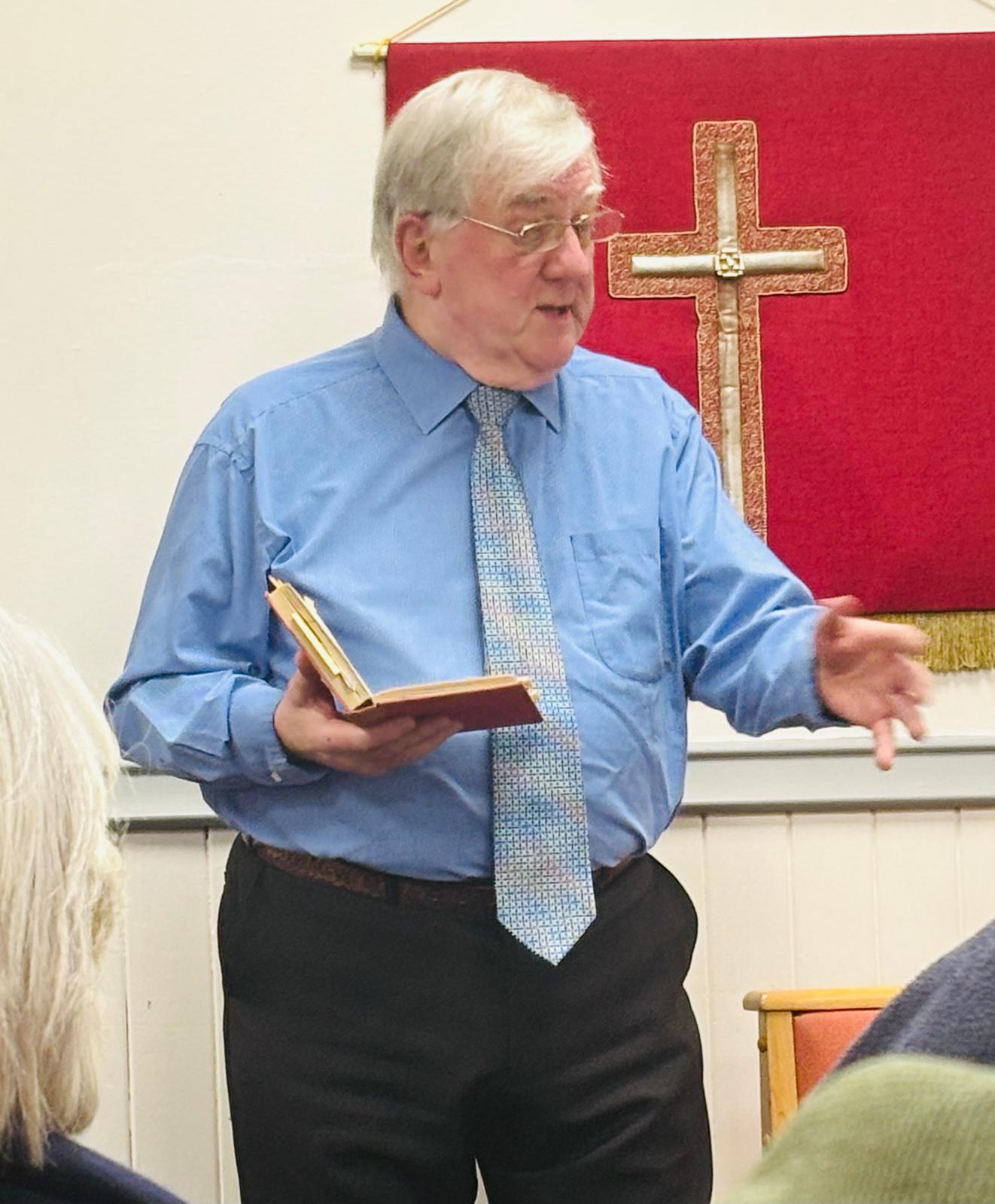
Stuart delivered his talk with great bonhomie and humour, despite struggling with what sounded like a very sore throat and a voice on the verge of disappearance. If I don't quite at the moment agree with Stuart, Roger Wheeler, and André Previn that Edward 'Duke' Ellington was America's greatest composer of the twentieth century, Stuart certainly put forward a very good case for it.
Handout
The two-page handout that was given to members before the talk:
Page 1: Timeline
Page 2: Contents of “Such Sweet Thunder”
Resources
Stuart told us he used the following.
Audio
The CD of Such Sweet Thunder I used was ESSENTIAL JAZZ CLASSICS EJC55416. Such Sweet Thunder is also available as a MP3 download.
The tracks of Black & Tan Fantasy (version of 26/10/27 on Victor label) and Take the A Train (original commercial recording on 15/02/1941) can easily be found online. An online search will lead to many CDs on which each may be found. I just selected two of my CDs on which they are particularly well remastered.
Book
A good Ellington overview is
Beyond Category: The Life And Genius Of Duke Ellington by John Edward Hasse Da Capo Press ISBN 10 0306806142 and ISBN 13 9780306806148. Lots available second-hand online for under £10.
Images